


What Is a Delivery Management System (DMS)? Technical Guide
Explore how modern logistics software automates dispatching, optimizes routes, and improves last-mile tracking. A practical look at core features and benefits.

Andrey Golubinskiy
Co-Founder. Entrepreneur. Advisor.
 13 min
 2.7.2026
Managing deliveries through WhatsApp and Excel works for small volumes. But once orders start piling up, that manual routine causes problems. Spreadsheets get messy. Finding out if a package actually arrived means making direct phone calls to the drivers.
A delivery management system (DMS) replaces this setup. It takes dispatching, route planning, driver tracking, and customer updates and connects them into one automated workspace.
We put together this guide to clarify what is a delivery management system, how it works in practice, and what features you actually need when comparing software.
The Cost of Operating Without a DMS
Operating without a DMS creates immediate data gaps. The second a van leaves the loading dock, the dispatcher loses tracking control. A driver gets stuck in city traffic. A customer gives the wrong gate code. The dispatcher usually only hears about these problems after the delivery window is already missed.
Manual routing also relies heavily on guesswork. A human trying to map out 100 stops will inevitably create overlapping routes. Vans end up driving the same streets twice. That directly increases your fuel costs and the time spent per stop.
What is a delivery management system?
A DMS delivery management system is logistics software that links your dispatchers, field drivers, and customers together.
Businesses stop treating route planning and customer updates as separate chores - the platform runs them as one continuous workflow.
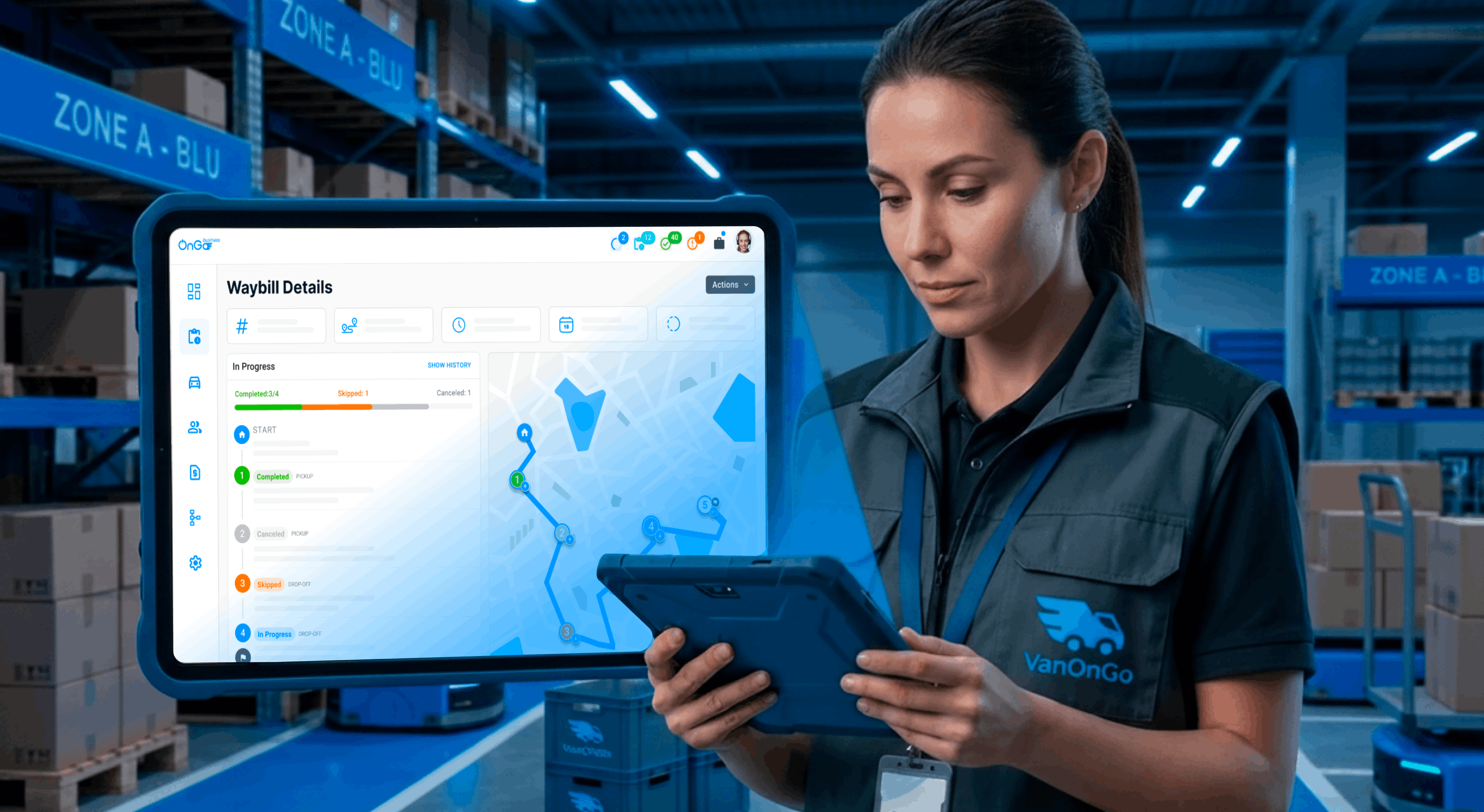
Let's look at the daily routine. The system pulls raw order details straight from the warehouse. Then, the software automatically builds the most efficient driving route, tracks the courier on a live map, and collects digital proof when the box is finally handed over.
The Architecture of a Delivery Management System
To understand how does a delivery management system work, it helps to look at its basic parts. A modern setup is not just a single program installed on an office computer.
The industry standard is to use a cloud-based architecture. The main reason for this is accessibility. A dispatcher sitting at a desk and a driver out on the highway need to see the exact same updates at the exact same time. The cloud makes this instant connection possible.
Let's break down the four main delivery management system components that make this happen.
The Dispatch Dashboard (Back-Office Interface)
This is the main screen for the logistics team. Dispatchers open a web browser and look at a live map showing all active routes, vehicles, and pending orders. Instead of jumping between different tabs and spreadsheets, the team relies on one single delivery management platform. They use it to track driver progress, fix delivery problems, and change routes manually if a high-priority order drops in.
The Driver Mobile Application
Field operations depend entirely on a mobile app installed on standard iOS or Android phones. Once the office calculates the optimal routes, those schedules go straight to the driver's device. The courier gets an ordered list of stops, built-in GPS navigation, and customer phone numbers.
The app also collects field data. At the doorstep, the driver uses it to scan barcodes, take photos, and collect electronic signatures to prove the package was successfully handed over.
The Customer Tracking Interface
The third part is built for the buyer. When a van starts heading toward a destination, the system sends an automatic SMS or email. That message contains a secure tracking link. The customer clicks it and sees a live map with the courier's exact location and an updated arrival time. Giving buyers this direct access stops them from calling the support desk to ask about delayed packages.
The API and Integration Layer
A logistics tool needs to talk to other software to be useful. The integration layer handles this connection. It automatically pulls raw order details directly from an online store or a warehouse system. When a warehouse worker packs a box and scans the shipping label, the order goes straight into the daily routing queue. Nobody in the office has to type the address manually.
Core Features of an Industrial Delivery Management System
Choosing software should never be about counting features on a pricing page. The goal is to fix real operational bottlenecks. For example, a basic GPS tracker just shows dots on a map, which does not actually solve any routing problems. A true delivery management system analyzes that location data and makes smart decisions for the dispatch team.
Here is a breakdown of the core delivery management system features that actually change how a logistics hub operates on a daily basis.
Dynamic Route Optimization
Static routes break down the minute a truck leaves the depot. Traffic jams build up. Customers cancel orders. Standard mapping tools cannot handle these mid-day changes. Dynamic routing solves this. The engine constantly balances cargo volume limits, delivery time windows, and live traffic updates. If conditions on the ground change, the stop sequence updates automatically. Vans drive fewer miles, burn less fuel, and complete more stops.
Automated Dispatching and Order Assignment
Assigning orders by hand does not scale. When a warehouse processes a sudden spike in volume, manual dispatching creates a bottleneck. Automation takes over this exact step. The software looks at incoming orders and immediately matches them to the right courier. It checks who is closest, who has empty space in the cargo hold, and which driver has the right equipment. The entire matching process happens instantly. Logistics teams handle peak seasons exactly this way without hiring temporary office staff.
Electronic Proof of Delivery (ePOD)
Lost paperwork costs money. False customer claims cost even more. Paper manifests provide zero immediate accountability. Digital proof of delivery moves this entire process to the driver's smartphone. At the doorstep, the courier scans a barcode, takes a photo with GPS coordinates, or collects a digital signature. That data hits the back-office dashboard immediately. If a buyer claims they never got a package, the support team has hard evidence ready in seconds.
Real-Time ETA Management
Telling a buyer to wait at home between 9 AM and 5 PM almost guarantees a missed stop. People leave the house. To keep first-attempt success rates high, ETAs must be precise. If a driver gets held up at an apartment complex for twenty minutes, the DMS recognizes the delay. It instantly recalculates arrival times for the rest of the route and fires off an SMS to the next buyers in line. The customer knows exactly when to open the door. The support desk gets zero complaint calls.
Tangible Delivery Management System Benefits
Investing in logistics software always comes down to margins. A delivery business needs to move more boxes for less money. Let's look at the actual delivery management system benefits that directly improve a company's bottom line.
Optimizing the Cost Per Stop
Fuel costs remain high. Driver overtime adds up quickly. When dispatchers guess the best routes, trucks inevitably cross the same zip code twice in one afternoon. That wastes cash. Dynamic routing stops this waste. It keeps drivers on dense, strictly sequenced paths. Total fleet mileage drops. Fewer miles mean less fuel consumption and faster route completion. This immediately lowers the operational cost of every single stop.
Scaling Without Hiring More Dispatchers
Every growing operation hits a manual capacity limit. A good dispatcher can route a couple of hundred orders a day before making mistakes. A holiday sale creates a sudden volume spike. Without software, businesses either hire temporary office staff or watch the whole process grind to a halt.
Automation absorbs that spike. This is exactly why a delivery management system for small business setups is so critical. It allows a local operation to handle enterprise-level order volumes without doubling the office payroll. One person easily oversees thousands of automated tasks.
Eliminating the "Redelivery" Drain
A failed delivery severely degrades profit margins. If a driver leaves a missed delivery note, the company effectively pays that driver twice to do the exact same job the next day. Sometimes three times. Automated systems like VanOnGo keep buyers in the loop with highly accurate, shrinking ETAs. People are actually home to open the door. First-attempt success rates go up. This completely eliminates the cost of redundant trips.
Stopping the Guesswork
Manual estimation fails in fleet operations. Managers need hard numbers to find hidden costs. The best delivery management system gives operations teams a dashboard full of cold, hard data. It shows exactly which routes take too long, which drivers idle the most, and what specific neighborhoods drag down performance metrics. It turns messy field operations into clear, actionable reports.
How Does a DMS Integrate with the Existing Tech Stack?
A routing engine needs order data to function. To work properly, the platform has to pull information directly from the warehouse and checkout software. This link happens through standard APIs. People often confuse where one logistics tool stops and another begins. Let's clarify the differences.
Delivery Management System vs OMS
An Order Management System (OMS) handles the checkout. It tracks inventory, processes payments, and tells the warehouse to pack a specific item into a box. That is exactly where the OMS stops working.
The delivery management system vs OMS comparison comes down to digital versus physical tasks. Once a box gets a shipping label, the DMS takes over. It pulls the delivery address from the OMS, matches the package to a local driver, and maps the fastest street route. The OMS manages the digital purchase. The DMS manages the physical road.
Delivery Management System vs TMS
Transportation Management Systems (TMS) handle heavy freight. They manage ocean containers, cargo trains, and 18-wheelers moving pallets across the country. They focus on long-haul shipping rates and compliance.
The delivery management system vs TMS difference is all about the final mile. A TMS moves bulk inventory from a factory to a regional warehouse. It does not help a courier drop a single box at an apartment door. The DMS handles that localized, multi-stop routing. They solve completely different logistical problems.
What to Look for When Choosing a DMS
Choosing delivery management software carries risks. A platform might look fantastic during a sales presentation but fail completely during a busy holiday rush. Evaluating vendors means ignoring shiny marketing features and checking what actually keeps operations running under pressure.
Here is a practical checklist to bring to any vendor meeting.
Real-World Testing for Volume Spikes
Asking a software vendor if their system handles high order volumes always results in a "yes." Marketing teams promise perfect performance. A better approach is demanding a live stress test during the product demo. A logistics manager should bring a raw spreadsheet containing thousands of actual historical deliveries and ask the vendor to upload it on the spot. If the system takes several minutes to build the routes or the dashboard freezes, the tool will definitely crash during a real holiday rush. The engine must process and sequence thousands of stops in a matter of seconds.
Driver Onboarding Speed
Courier turnover remains high in logistics. Fleets constantly hire temporary drivers to cover busy sales periods. If a mobile app requires a long training course, a company will lose those drivers. The interface must be dead simple. A courier opens the application, checks the route, drives to the location, scans the package, and takes a photo. If closing a stop takes more than five screen taps, the design is too complicated.
Easy Software Integration
A routing engine fails if it cannot communicate with existing warehouse software. The setup process should take an internal IT team a few days of straightforward work. It should never require six months of custom coding and high consulting fees. A modern delivery management platform like VanOnGo is built to connect smoothly from day one, pulling order data automatically without complex workarounds.
Transparent Pricing Models
Software pricing structures vary wildly across the industry. Some vendors charge a flat monthly fee for every registered driver. Others charge a small fee for every successful drop-off. For a seasonal business hiring a large temporary fleet just for the holidays, a per-driver fee quickly destroys the budget. A delivery management system must offer a pricing model that perfectly matches the actual operational flow of the company.
The Bottom Line
For a growing business, the practical delivery management system meaning is straightforward: it is the tool that stops the constant guessing.
Relying on paper records, calling drivers to find their location, and fielding angry customer complaints no longer works. The margin for error in modern retail delivery is too small. Buyers expect total transparency. Dispatchers need software that handles the heavy routing work automatically. Upgrading to a digital platform allows a logistics team to stop reacting to daily emergencies and start protecting its profit margins.
VanOnGo is built to solve these exact last-mile problems. The platform combines dynamic route optimization with real-time customer tracking to keep operations moving efficiently. If a dispatch team is ready to drop the manual spreadsheets, the VanOnGo engine provides the exact infrastructure needed to automate the daily workflow.
On this page
You may also like...
 10 min15.4.2026
Last mile delivery customer experience: Why operations define the delivery experience
Late deliveries and failed drops aren't a customer service problem, they're a routing problem. See how fixing last-mile operations cuts failed attempts and keeps buyers coming back.
 10 min2.4.2026
How AI optimizes last-mile logistics: Moving from Static Plans to Smart Fleets
AI doesn't just plan faster routes, it makes decisions dispatchers can't make at scale. Here's how it works in last-mile logistics and what it actually changes on the ground.
 10 min26.5.2026
Why Retail Last-Mile Delivery Breaks Down - and How to Fix It
Discover why retail last mile delivery fails at scale. Learn how to eliminate hidden costs, fix manual dispatching, and optimize retail operations.
Let`s talk!
Loading form...