


The Hidden Tax on Retail Margins: How to Reduce WISMO Calls Through Logistics
Stop losing money on WISMO calls. Find out how fixing last-mile visibility reduces support tickets and transforms order tracking into a new sales channel.

Andrey Golubinskiy
Co-Founder. Entrepreneur. Advisor.
 10 min
 2.7.2026
For most e-commerce and retail brands, peak season or a successful flash sale brings a familiar operational challenge. While the sales charts look great, the customer support queue quickly becomes backlogged.
Suddenly, the support inbox is full of one identical question: "Where is my order?" This specific issue is known as WISMO. According to recent e-commerce customer service benchmarks, WISMO accounts for about 18% of total support volume year-round for an average Shopify brand. However, during Peak Season, industry benchmarks from Crisp and Alhena AI share that this figure sharply spikes, taking up 40% to 50% of all incoming tickets.
On paper, WISMO looks like a customer service headache. In reality, it is also a financial leak caused directly by broken last-mile logistics.
Every time a customer calls, texts, or opens a live chat to ask about their delivery, profit margins decrease. According to the Metricnet Service Desk Benchmarking Report, the average cost to resolve a single routine customer support ticket manually ranges between €5 and €11.
Let's do the quick math: If a business processes 10,000 orders a month and just 15% of those buyers experience "post-purchase anxiety" and reach out to the support team, that's 1,500 tickets. At a conservative €7 per ticket (an industry average), this equates to spending €10,500 every single month just to tell people "it's on the way." For brands selling fashion apparel, FMCG, or consumer electronics with tight margins, that cost degrades the profitability of those orders.
To see this in action, let's look at a case study from one of VanOnGo's clients, a UK broadband company. Before digitizing their field operations, coordinating a single visit required up to seven calls - including "Where is my technician?" inquiries from customers - costing the business roughly £25 per request. By implementing VanOnGo's software with real-time tracking and automated SMS updates, they reduced this coordination cost to just £0.69 per service. For a volume of 1,000 monthly requests, that translates to £25,000 in direct monthly savings.
But the financial damage doesn't stop at the support desk. WISMO calls create a persistent operational blind spot:
- The Support Team is Blind: When a customer calls, the support agent usually has to open a separate legacy tracking portal, see a generic status like "In Transit," and then call the dispatcher to find out where the driver actually is.
- The Dispatcher is Stressed: The dispatcher has to call or radio the driver - who is currently navigating traffic or looking for a parking spot - interrupting their workflow.
- The Real Problems Get Ignored: While the team is busy locating a standard package, high-priority issues like actual missing items, damaged cargo, or payment compliance errors sit at the bottom of the queue.
WISMO is the tax companies pay for a lack of visibility. It happens because there is a profound data gap between three critical entities: the delivery fleet, the back office, and the customer's smartphone.
The Root of WISMO: Why Customers Contact Support
The moment a credit card clears, the customer's mindset shifts instantly from excitement to vulnerability. They have parted with their money, but they don't have the product yet. This gap creates what psychologists and e-commerce experts call "post-purchase anxiety."
Retailers often make the mistake of thinking customers just want their items faster. But data proves otherwise. According to McKinsey's research on consumer delivery expectations, buyers actually rank on-time reliability and visibility as significantly more important than raw speed (like expensive same-day delivery). The report highlights that customers primarily want companies to keep their delivery promises - and they will obsessively check their tracking status to see if companies do.
When retailers fail to provide that visibility, the anxiety spikes, and the customer picks up the phone. Here is what triggers the WISMO impulse:
- Generic Tracking Links: Most retailers hand the customer a generic carrier tracking number. For three days, the status stubbornly says "In Transit." It tells the buyer absolutely nothing about where the truck is or when they actually need to be home. Without clear updates, customers fill the information gap by calling the support team.
- The Vague "9-to-6" Window: Telling a modern consumer to sit at home between 9 AM and 6 PM is an operational relic. If it is 2 PM, the customer has paused their day, and nobody has shown up yet, they start to doubt the delivery will happen at all. A WISMO call is their only way to regain control of their schedule.
- The Fragmented 3PL Experience: If a company uses a mix of internal fleets and outsourced 3PL partners, the customer experience is disjointed. One courier sends a nice SMS; the other shows up unannounced and leaves a "Sorry we missed you" note. Because the customer doesn't know which carrier got their order, they default to calling the brand when confusion hits.
WISMO is not a symptom of impatient customers. It is a rational response to bad communication. To stop the calls, businesses have to stop creating the information gap in the first place.
Strategy 1: Proactive Visibility Beats Reactive Support
The most effective way to eliminate a WISMO call is to answer the question before the buyer even thinks to ask it. Shifting from a reactive support model to a proactive communication strategy instantly defuses customer frustration.
Instead of waiting for a ticket to drop into the helpdesk queue, modern retail operations rely on automated, real-time updates. When the information flows to the consumer naturally, the urge to contact support vanishes. Here is how that looks in practice:
- Branded Live Tracking: A static "Out for Delivery" email provides zero actionable context. However, sending an SMS alert with a link to a live map changes the dynamic entirely. Watching the courier's vehicle move in real time replaces uncertainty with transparency. Furthermore, keeping that tracking page branded - rather than redirecting traffic to a third-party carrier's website - keeps the customer engaged within the retailer's ecosystem.
- Shrinking ETAs: The traditional 9-to-6 delivery window forces buyers to block out their entire day. Dynamic routing engines solve this by offering shrinking Estimated Times of Arrival (ETAs). A morning notification might provide a two-hour window, but as the van completes its route, the system automatically narrows that down to a precise 15-minute slot.
The impact of this shift is highly measurable. For example, our client, the retail chain Jysk, introduced VanOnGo's 2-hour delivery time slots for heavy and bulky goods, which require the consumer to be home. This precision significantly improved their first-attempt delivery rate and dramatically reduced WISMO calls, removing a heavy burden from their customer support team.
- Self-Service Adjustments: Sometimes plans change, and buyers realize they won't be home. If the only way to reschedule a delivery is to call support, that triggers another ticket. Providing a self-service option directly on the tracking page - allowing the consumer to leave a note for the driver, change the drop-off day, or redirect the package to a neighbor - diverts that interaction entirely away from the call center.
When consumers have exact timing and control at their fingertips, they no longer need to call. As a direct result, not only does support volume drop, but first-attempt delivery success rates rise significantly because buyers actually know when to open the door. Increasing this first-attempt delivery rate also brings a direct environmental benefit. When a driver completes a drop-off on the first try, the vehicle avoids returning to the same address the next day, cutting unnecessary fuel consumption and reducing carbon emissions per order.
Strategy 2: Centralizing Fleet Visibility to Catch Exceptions Early
A proactive customer interface is only part of the solution. If the back office lacks real-time visibility, WISMO calls will still slip through. In traditional retail logistics, a dispatcher usually discovers a delayed order because the support team called them, who in turn only found out because an angry customer called first. This workflow is highly inefficient.
To permanently reduce support tickets, dispatchers must spot delivery exceptions - such as traffic delays, vehicle breakdowns, or issues with building access - before the delivery window breaks.
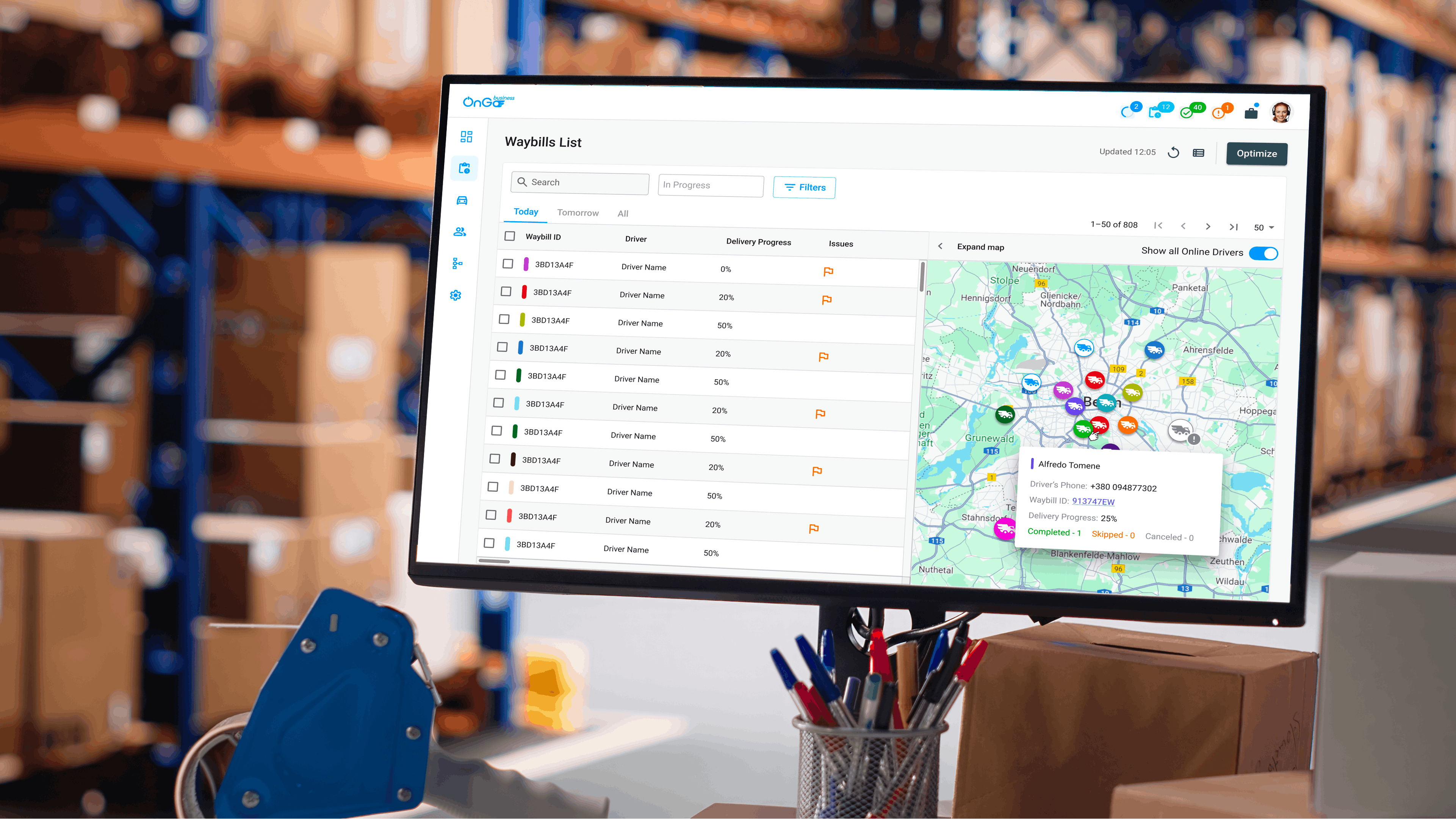
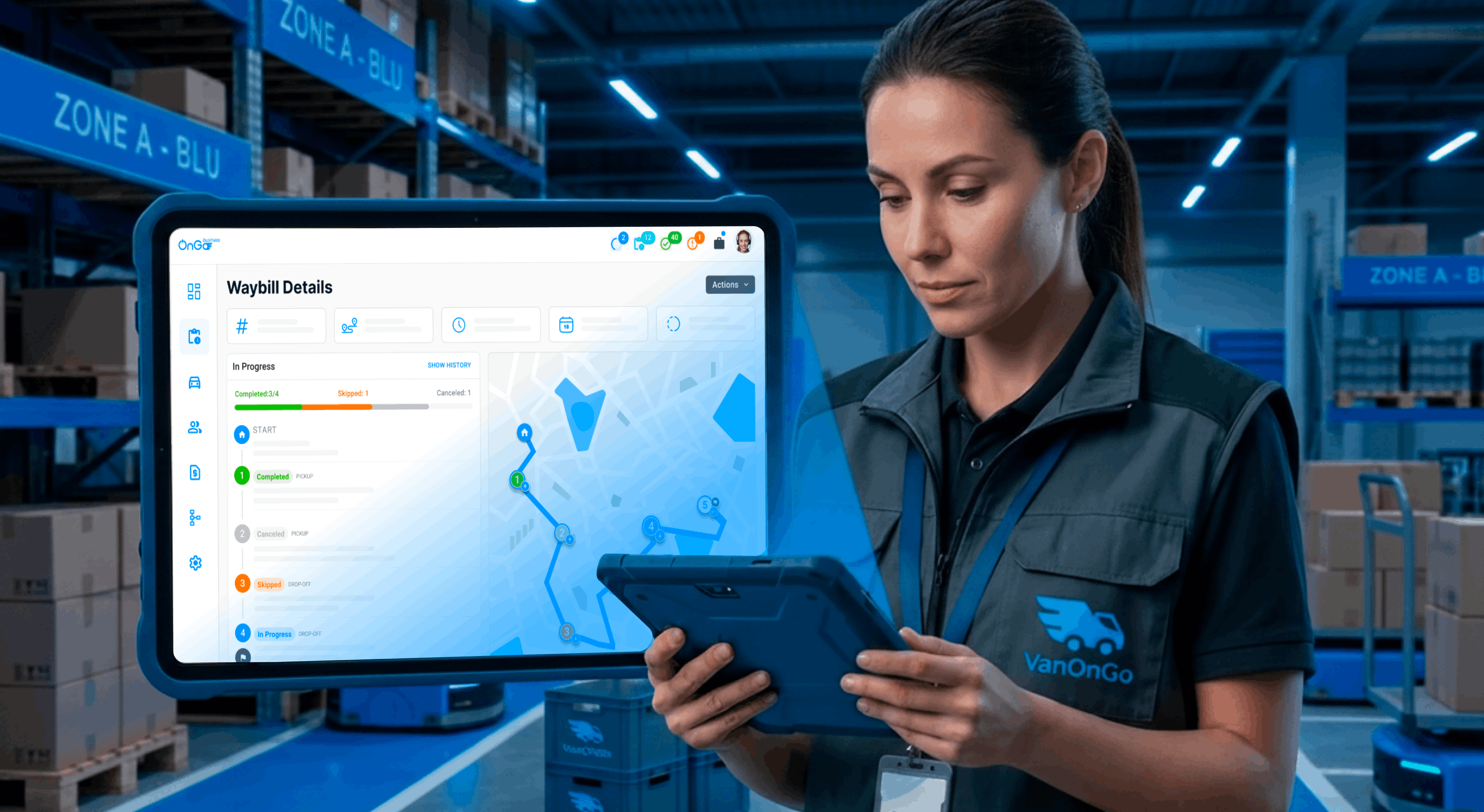
This is where modern technology changes the operational hierarchy. Platforms like VanOnGo are built to consolidate retail delivery management by bringing all moving parts onto a single screen. Instead of juggling different carrier portals and internal spreadsheets, dispatchers get a unified view of the entire operation, regardless of whether a package is in an internal company van or handed off to a 3PL partner.
With a centralized dashboard, the system manages exceptions automatically:
- Predictive Delay Alerts: If a courier is stuck at a complex drop-off for 15 minutes longer than planned, the routing engine immediately flags the delay. The dispatcher sees the anomaly in real time, not at the end of the shift.
- Automated Route Rebalancing: Instead of manually calling drivers to figure out how to catch up, the software can automatically adjust the remaining sequence or reassign pending orders to nearby couriers with extra capacity.
- Proactive Customer Notifications: If a delay is unavoidable, the platform triggers an automated SMS update to the next customers on the route, adjusting their shrinking ETA by a few minutes.
By catching exceptions early and letting the system update the ETAs dynamically, the problem is handled in the background. The consumer is kept in the loop automatically, the support team remains undisturbed, and the dispatcher actually manages the fleet instead of acting as a telephone operator.
From Cost Center to Revenue Channel
Solving the WISMO problem does more than just cut operational costs; it unlocks a completely new marketing asset. When post-purchase uncertainty is replaced with reliable visibility, the tracking link transforms from a tool for damage control into a highly engaging digital touchpoint.
The 3.4x Engagement Opportunity
According to post-purchase industry benchmarks, data consistently shows that buyers check their delivery tracking pages an average of 3+ times per single order. In e-commerce, capturing a customer's undivided attention 3+ times without spending a single cent on ad acquisition is rare. Yet, the vast majority of retail brands hand this valuable traffic over to a third-party logistics provider.
When buyers click a standard shipping link, they are usually taken entirely out of the retail ecosystem. They see a sterile progress bar, a third-party carrier logo, and absolutely nothing else. The brand essentially pays to send its own highly engaged traffic to someone else's website.
Monetizing the Live Tracking Experience
By taking ownership of the last-mile interface, retail operations can convert this high-intent traffic into actual sales. Instead of surrendering the post-purchase journey, platforms like VanOnGo allow brands to deploy a fully customized tracking page where the live courier map sits right next to targeted retail media.
While the consumer watches their driver's progress and the shrinking ETA window, the page can dynamically display complementary products. If a customer ordered a smartphone, the tracking page can highlight the matching wireless earbuds. For a fashion retailer, it is the perfect space to promote a next-season apparel drop or offer a limited-time loyalty discount.
Because the buyer is already in a receptive, transactional mindset - and relieved that their delivery is accurately scheduled - the conversion rates on these native upsells are high. What started as a logistical necessity to prevent a support call successfully becomes a natural extension of the digital storefront.
Real-world data validates this revenue potential. Merchants on the Kaspi.kz marketplace who utilize VanOnGo's delivery services experience a threefold increase in sales volume. Furthermore, the delivery interface allows businesses to offer instant extra services on the go. For instance, Dicentra, a flower delivery service, uses this capability to let customers instantly order add-ons, like a greeting card, directly generating more revenue from extra services.
The Bottom Line: Fixing Logistics Fixes Support
Treating WISMO as a customer service problem is ineffective. Hiring more support agents to answer the same tracking questions only treats the symptom while letting underlying operational inefficiencies drain profit margins.
The same applies to automated customer service chatbots. Many brands attempt to deflect WISMO volume by deploying bots, but if the software lacks integration with live fleet operations, it can only repeat the generic "In Transit" status. A chatbot without real-time logistics data often frustrates customers further, leading to an escalated support ticket anyway.
True resolution requires treating this customer uncertainty as a logistics data problem. By closing the visibility gap between the fleet, the back office, and the consumer, retailers can eliminate the information gap that triggers support calls in the first place.
The Operations Checklist: Is the Fleet Ready for Peak Season?
Before the next major volume spike hits, operations leaders should evaluate the current last-mile setup against these four critical benchmarks:
- Operational Transparency: Can the support team see the exact GPS location of any courier immediately, or do they have to navigate external carrier portals and radio the driver?
- Proactive Communication: Are buyers receiving automated live maps with shrinking ETA windows, or are they relying on static tracking links that leave them waiting all day?
- Dispatcher Empowerment: Does the routing engine flag predictive delays automatically, or does the dispatcher rely on angry customer calls to find out a route is falling behind?
- Post-Purchase Ownership: Is the order tracking traffic redirected to an external 3PL website, or is it retained within a branded ecosystem that drives secondary revenue?
When the answers to these questions shift toward automation and proactive tracking, WISMO calls stop being a multi-thousand-dollar monthly expense. With a partner like VanOnGo, brands can finally turn last-mile delivery from a major operational vulnerability into a smart tool that drives both transparency and new revenue.
On this page
You may also like...
 13 min2.7.2026
What Is a Delivery Management System (DMS)? Technical Guide
Explore how modern logistics software automates dispatching, optimizes routes, and improves last-mile tracking. A practical look at core features and benefits.
 10 min12.4.2026
Last-Mile Route Optimization in 2026: Static vs Dynamic Routing
Learn the difference between static and dynamic routing. Discover how last-mile delivery route optimization prevents delays, cuts manual dispatching, and protects fleet margins.
 10 min2.4.2026
How AI optimizes last-mile logistics: Moving from Static Plans to Smart Fleets
AI doesn't just plan faster routes, it makes decisions dispatchers can't make at scale. Here's how it works in last-mile logistics and what it actually changes on the ground.
Let`s talk!
Loading form...